Author: zaid
-

Robot transporter
Robot
TINY HAND GESTURE
What Are HTML, CSS, and JavaScript?
In the Transporter website, we use three main programming languages: HTML, CSS, and JavaScript. HTML is used to create the website structure, such as buttons, text, and dashboard sections. CSS is used to design the website, including colors, fonts, sizes, and layouts. Meanwhile, JavaScript makes the website interactive, such as connecting Bluetooth and sending commands to control the robot.
Explanation of the Web Dashboard
The Transporter Web Dashboard is the main page used to control the robot through a Bluetooth connection. It has several features, such as buttons to move the robot forward, backward, left, and right, a stop button to stop the robot, and gripper controls to pick up and release objects. This dashboard is designed to make controlling the robot easier using a laptop or computer.
Robot Demonstration
In this session, we will demonstrate the Transporter robot directly. We will show how the robot can move forward, backward, turn left, and turn right using the buttons on the web dashboard. We will also demonstrate how the gripper works to pick up and release objects. This demonstration shows how the website control system works with the robot in real time.
MakeCode and Dashboard Programming
In the Transporter project, we use two programming systems: Microsoft MakeCode and the Web Dashboard. MakeCode is used to create the program for the micro:bit V2, which receives and processes Bluetooth commands to control the robot. Meanwhile, the Web Dashboard is built using HTML, CSS, and JavaScript to control the robot. Both programs work together, allowing commands from the dashboard buttons to be received by the micro:bit V2 and carried out by the Transporter robot.

-
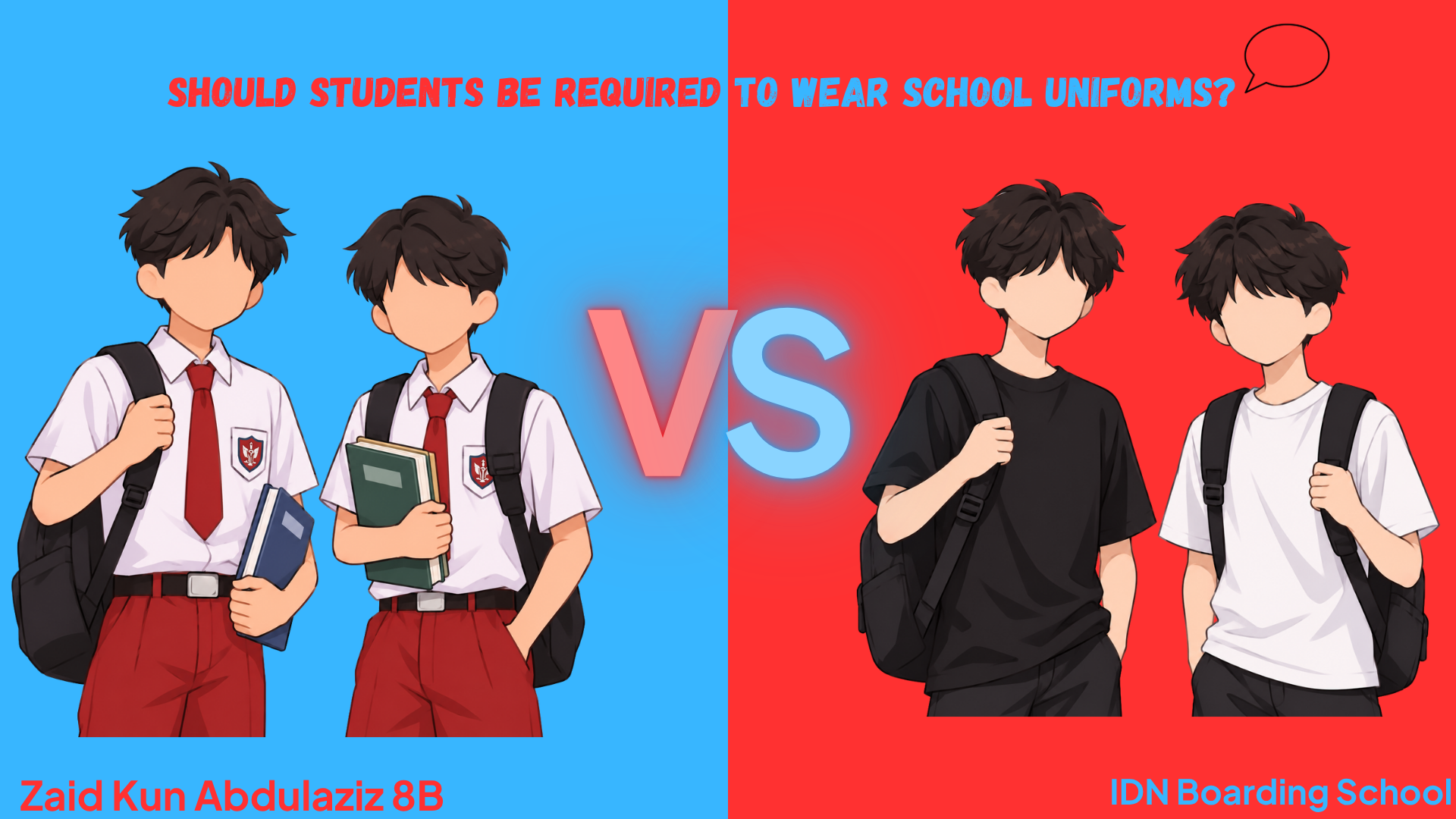
Giving opinion
Giving opinion
ok, Assalamualaikum wr wb let me introduce myself my name is Zaid Kun Abdulaziz you can call me Zaid and this time will do my project about Giving opinion (school uniforms)
In my opinion, school uniforms are still important, but students should also have some freedom to choose what they wear.
I believe uniforms can create equality, build school identity, and teach students discipline.
However, students should also feel comfortable at school. Wearing uniforms does not automatically make students smarter or more disciplined.
I think schools should provide comfortable and affordable uniforms and allow suitable casual clothes for certain activities.
For me, what matters most is not what students wear, but how they behave, learn, and respect others.
Wassalamu’alaikum warahmatullahi wabarakatuh.
-
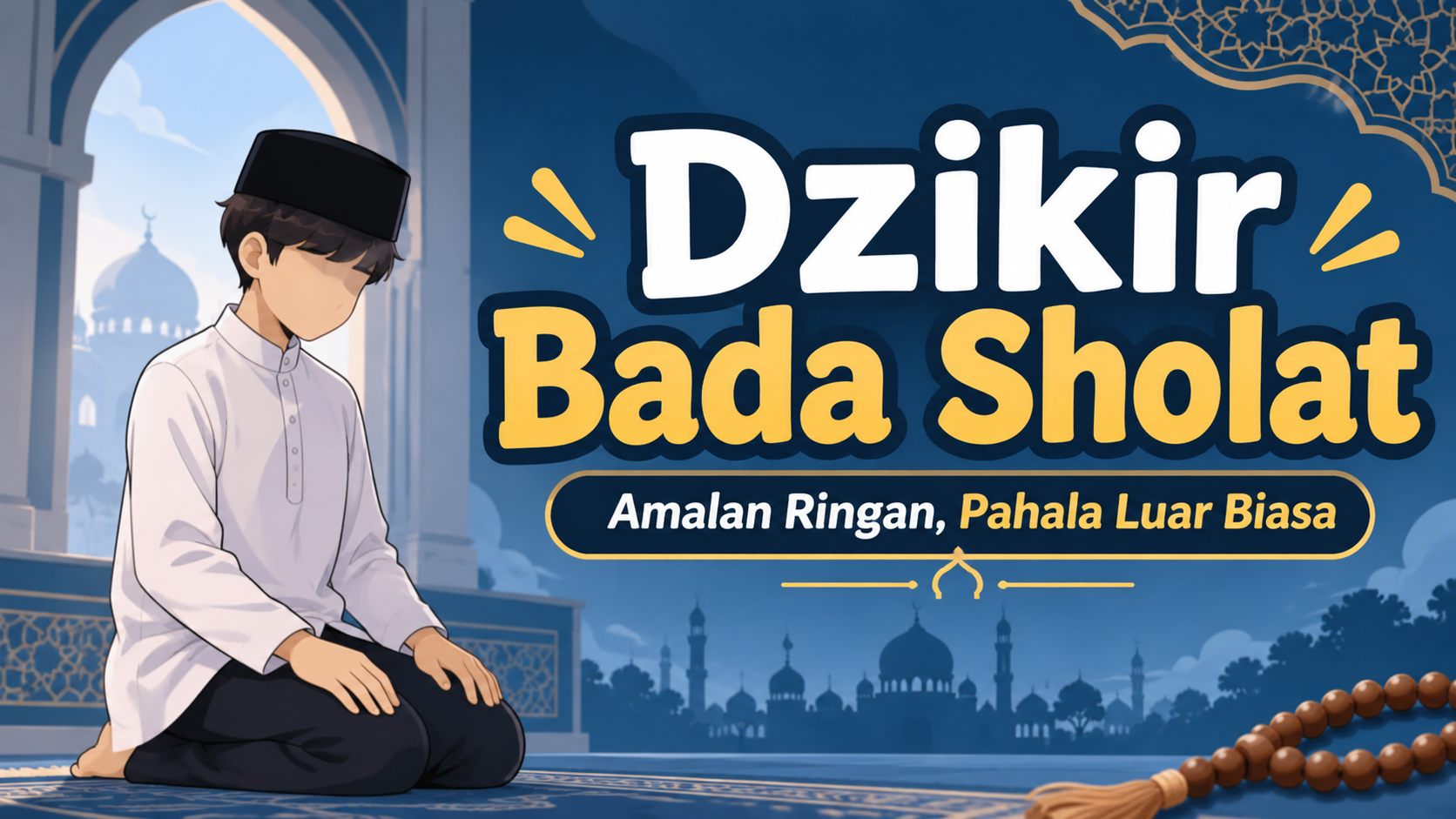
Paham dzikir bada sholat
ok,Assalamu’alaikum warahmatullahi wabarakatuh let me introduc my self my name is Zaid Kun Abdulaziz you can call me Zaid and this time I will read dzikir sholat,
Dhikr after Salah is the practice of remembering Allah SWT after completing the obligatory prayers. It is a recommended Sunnah taught by Prophet Muhammad ﷺ.
-

Paham dzikir dalam sholat
ok,Assalamu’alaikum warahmatullahi wabarakatuh let me introduc my self my name is Zaid Kun Abdulaziz you can call me Zaid and this time I will read dzikir sholat,
Dhikr (remembrance of God) during prayer has many virtues. Dhikr is not just a recitation during prayer, but also a form of remembering Allah SWT, drawing closer to Him, and increasing devotion in worship.
-
Tinybit hand gusture
Hand gusture
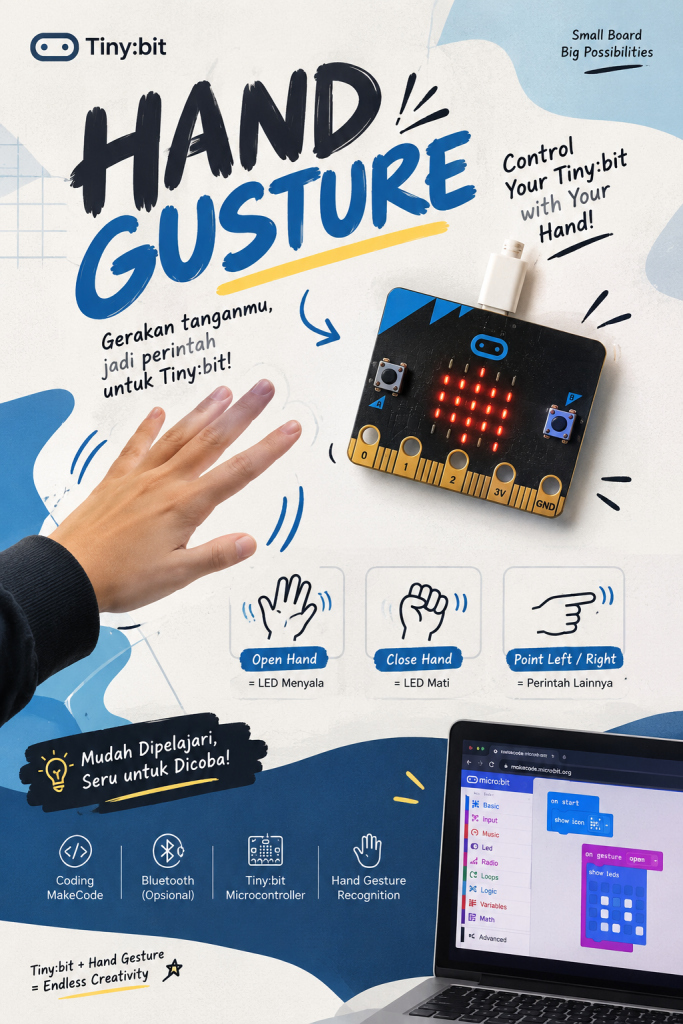
TINY HAND GESTURE
Tiny Hand Gesture is an innovative technology project that combines the Tiny robot, micro, and hand gesture recognition to create an interactive and intelligent system. This project allows users to control a robot or perform specific commands using hand movements. With the help of sensors, programming, and Bluetooth connectivity, the system can make technology more interactive, creative, and easy to use.
Tiny Hand Gesture — Control the Future with Your Hands!
-
Poster Merchendise
Merchendise
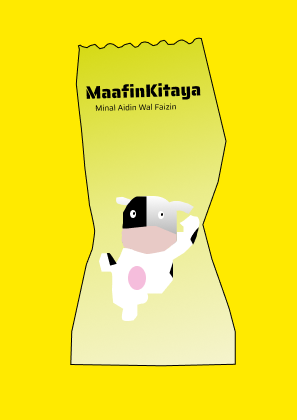
ONE DAY AT A TIME – Minimalist Graphic T-Shirt
This T-shirt design features a minimalist aesthetic with four colorful graphic panels in beige, teal green, orange, and black. Each panel includes a sun or moon symbol and wavy lines, representing the passage of time, peace, and the changes we experience in life.
The phrase “ONE DAY AT A TIME” means living life one day at a time without worrying too much about the future. The combination of contrasting colors and a clean white T-shirt creates a modern, artistic, and casual look.
More than just a fashion piece, this design carries a positive message: stay focused on the present, appreciate every process, and keep moving forward step by step.

-
Poster Adab
Poster Adab
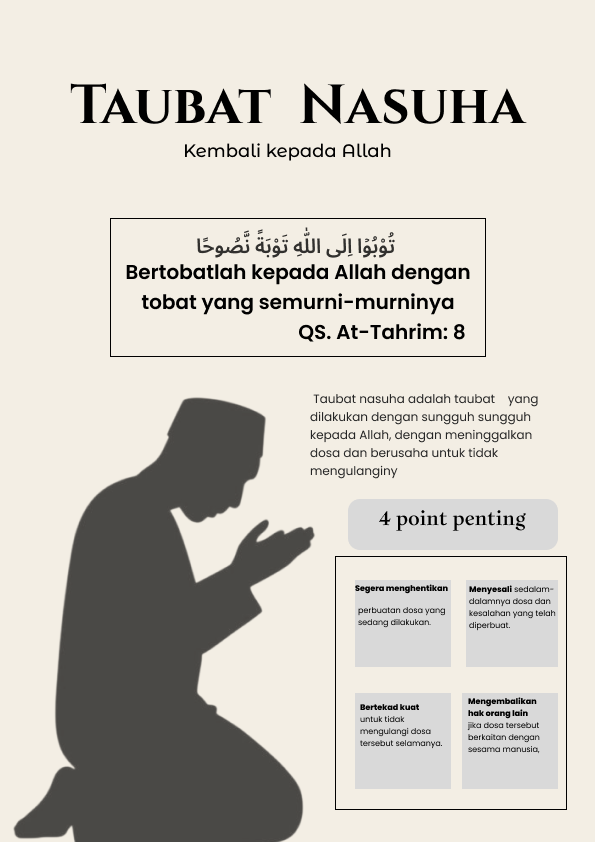
Sincere Repentance (Taubah Nasuha)
Taubah Nasuha means sincerely repenting to Allah after committing a sin. It means feeling truly sorry, leaving the sin, and having a strong intention not to do it again.
📖 Evidence from the Qur’an
Allah SWT says in Surah At-Tahrim, verse 8:
“O believers! Turn to Allah in sincere repentance.”
(Qur’an, Surah At-Tahrim: 8)
✅ Conditions of Sincere Repentance
-
Stop committing the sin.
-
Feel truly sorry for the sin.
-
Make a strong decision not to repeat it.
-
If the sin involves another person’s rights, return what belongs to them or apologize to them.
In short: Sincere repentance is not only saying “Astaghfirullah”, but also changing our actions and trying to become a better person.
-
-
Speech
Speech
ok, Assalamualaikum wr wb let me introduce myself my name is Zaid Kun Abdulaziz you can call me Zaid and this time will do Speech about
this time i will delivera short speech the tilted is whoever does evil will see it too
but before that first of all.
Hook
Imagine, no matter how small the bad deed you do, there will be a response.
n life, we sometimes think that the bad deeds we commit will go unnoticed. We may be able to hide them from people, but we can never hide them from Allah SWT.
Allah SWT says in Surah Az-Zalzalah verse 8:
وَمَن يَعْمَلْ مِثْقَالَ ذَرَّةٍ شَرًّا يَرَهُۥ
“And whoever does evil equal to the weight of an atom will see it.”
(QS. Az-Zalzalah: 8)
This verse teaches us that no deed is in vain before God. No matter how small the evil we commit, it will all be recorded and we will receive retribution.
For example, when we lie, mock a friend, hurt someone, or do something unkind when no one is watching, never think of it as a small matter. God is All-Knowing of our every action
However, this verse does not only remind us of evil. Previously, Allah also said that whoever does good deeds as heavy as zarrah, he will also see the reward.
So, never underestimate any act of kindness, no matter how small. Helping a friend, telling the truth, smiling, respecting your parents, and doing good to others all have value in the sight of Allah.
In conclusion, we must have a muraqabah attitude. and think about something before acting
Wassalamu’alaikum warahmatullahi wabarakatuh.
-
Story the two farmers and the well third project
The two farmers and the well
ok, Assalamualaikum wr wb let me introduce myself my name is Zaid Kun Abdulaziz you can call me Zaid and this time will do Story telling about
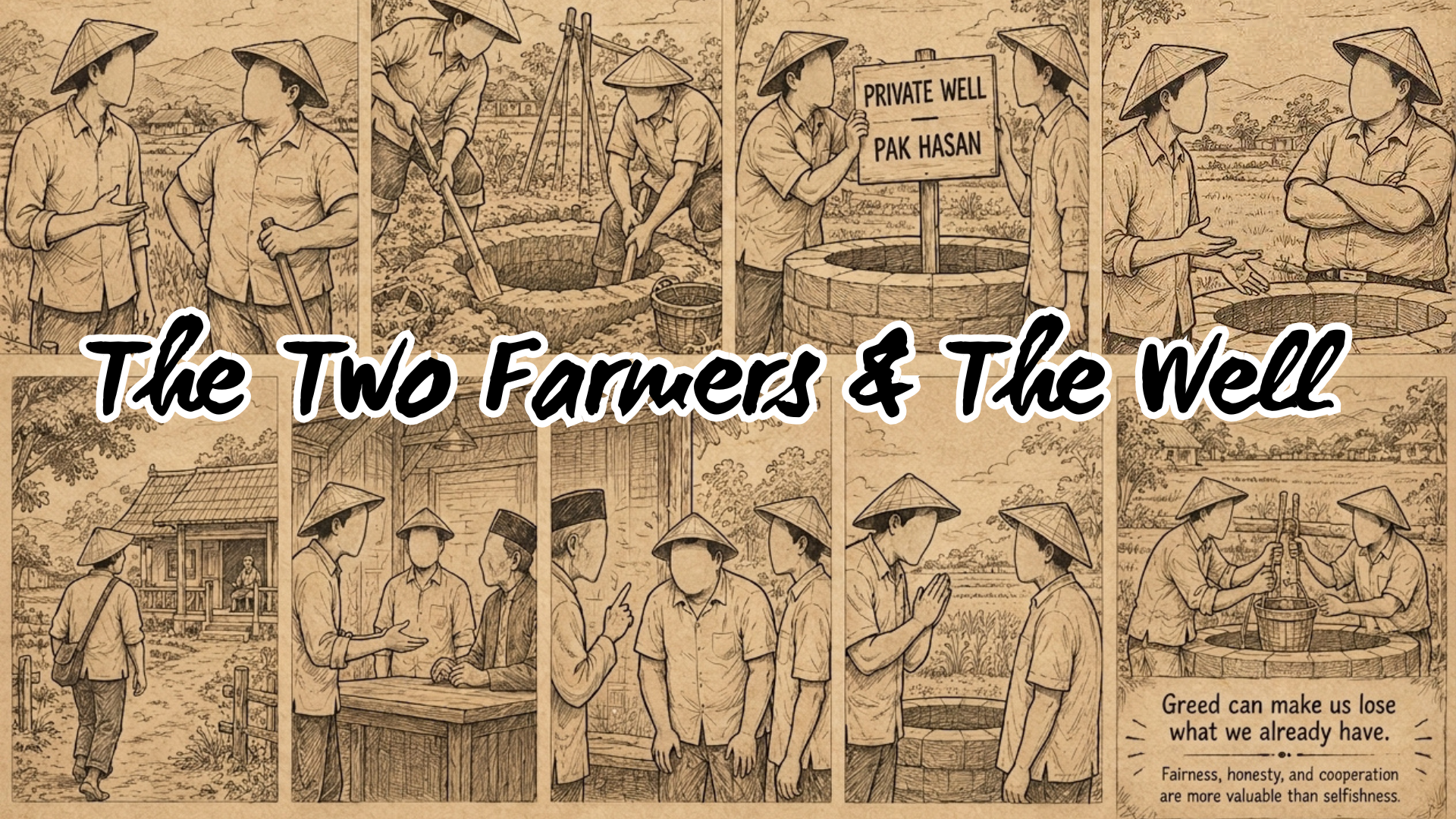
THE TWO FARMERS AND THE WELL
For many years, Pak Budi and Pak Hasan had been neighbours. Their farms were next to
each other, but they had very different personalities. Pak Budi was patient and honest, while
Pak Hasan was hardworking but often wanted more than his share.
One year, the village faced a long and terrible dry season. The river became smaller every
day, and the farmers were worried. Without enough water, their crops would die.
One afternoon, Pak Budi had an idea.
“Why don’t we dig a well together?” he suggested. “We can share the water equally. If we
work together, we can finish it faster.”
Pak Hasan agreed.
For three hot days, they worked from morning until afternoon. They dug the ground, carried
heavy soil, and encouraged each other when they became tired. Finally, on the third
afternoon, they heard the sound they had been waiting for.
**Water!**
They shouted with joy. The well was full of fresh, clear water.
But the next morning, something unexpected happened.
Pak Hasan arrived at the well early and put a wooden sign beside it:
**“PRIVATE WELL — PAK HASAN”**
When Pak Budi saw the sign, he was shocked.
“What are you doing?” he asked.
Pak Hasan smiled. “I dug most of the well, so the water belongs to me.”
“But we worked together,” Pak Budi replied. “We agreed to share it equally.”
Pak Hasan pointed at the ground. “You can have the hole. I will keep the water.”
Pak Budi was angry, but instead of fighting, he decided to think carefully.
The next morning, he went to the village elder.
“Pak Hasan says the water is his and the hole is mine,” Pak Budi explained.
The elder listened carefully. Then he smiled.“Very well,” he said. “If Pak Budi owns the hole, Pak Hasan cannot keep water inside
someone else’s property. Tell him to remove the water from the hole immediately.”
When Pak Hasan heard this, he suddenly became nervous.
“But where should I put the water?” he asked.
“That is your problem,” replied the elder calmly.
Pak Hasan finally understood his mistake. His clever plan had trapped him in his own greed.
He apologized to Pak Budi.
“I was too greedy. We worked for this together, so we should share it together.”
Pak Budi accepted his apology.
From that day on, they shared the well fairly. More importantly, they learned that working
together was more valuable than trying to take everything for themselves.
That year, their farms produced more crops than ever before.